Biozene | Animal Health & Nutrition Experts

Author name: admin

Knowledge Centre

Immunity & Immune suppression in Poultry

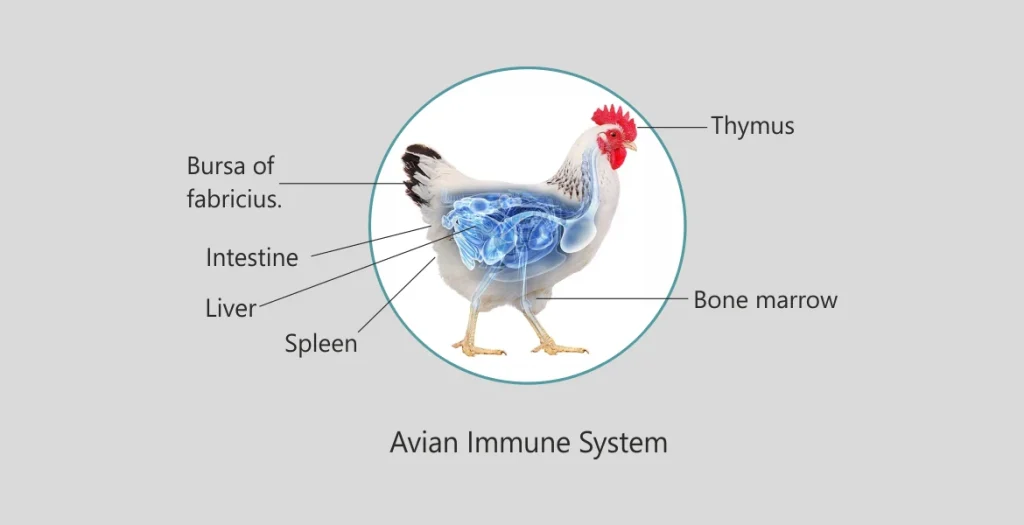
Immune system in poultry Immune system mechanism in poultry is made up of two types of mechanism1.Non specific2.Specific Non-specific immune mechanisms This includes the innate or inherent ways in which poultry fight against diseases. These include genetic factors, body temperature, anatomic features, normal microflora, respiratory tract cilia etc. Innate Immune System The innate immune system is made of defences against infection that can be activated immediately once a pathogen attacks, aim to keep viruses, bacteria, parasites, and other foreign particles out of body or limit their ability to spread and move throughout the body. It includes: ●Physical Barriers : Such as skin, the gastrointestinal tract, the respiratory tract, the nasopharynx, cilia, eyelashes and other body hair. ●Defense Mechanisms: Various secretions like mucous, bile, gastric acid, saliva, tears, and sweat. ●General immune responses : Response against Inflammation, complement, and non-specific cellular responses. Specific immune mechanisms (acquired system) This system is divided into cellular and non-cellular (humoral) components. Immune system combats the antigens and ensures the good health status of the bird. Classification of Immune System Humoral: Consist of immunoglobulin (antibodies) and the cells which produce them.B-lymphocytes are the cells which are responsible for the production of antibodies. There are three classes of antibodies which are produced in the chicken after exposure to a disease or vaccination; these include Ig M, Ig G, and Ig A. Cellular: This include all the cells that fights with antigens, except those associated with antibody production. The cells associated with this system are the T-lymphocytes. Some T-cells produce lymphokines (over 90 different ones have been identified) and some directly destroy disease organisms.Anything which damages the cellular or humoral immune systems lowers the active immunity. When the chick receives pre-made antibodies from the hen through the egg or from any other source then it is called passive immunity. The organs or cells that are the part of immune system in poultry are: Bursa of fabricius.  Components of Immunity Development of the immune system Development of the immune system is initiated during embryogenesis but is not complete until after hatch. This development may be limited by nutrient availability in fasted hatchlings. Early feeding was associated with larger bursa weights and greater lymphocyte proliferation.Residual yolk did not provide the required level of nutrition to fully support immune system maturation during the first two days after hatch. Appearance of biliary IgA and germinal centres occurred earlier and in larger amounts in birds given early nutrition, indicating a more rapid development of the capability to respond to vaccine administration. Improved immune system associated with improved bird performance following a disease challenge. The chick or poult should be provided with an optimum nutrient formulation and a source of water immediately after hatching. This initiates immune development and spares yolk macromolecules such as yolk antibodies for passive immunity. Biochemically, residual yolk lipids are ideal for Lipid transport, for cell membrane and immunomodulator synthesis, and for development of the central nervous system and retina. What is immunosuppression? Immunosuppression is a state of body when the immune system or humoral (antibodies) and cell mediated immunity is depressed. Immunosuppression may affect both health and performance. Increased mortality, uneven growth, decreased body weight, higher feed conversion, higher medication costs and higher rate of condemnations at slaughter are common findings in immunosuppressed birds. Basically, the organs or cells that can damaged are:  The bursa of fbricius  The thymus The spleen The bone marrow  The lymphoid cell aggregates along the gut, the trachea, the oesophagus, for instance, the harderian gland, the caecal tonsils and the payer’s patches The circulating lymphocytes   Symptoms : Mechanism of immunosuppression in some viral diseases Virus B lymphocyte Effect upon T lymphocyte Macrophages Others Gumborodisease Depletion of bursal and peripheral populations —— —— —— Marek’s disease Destruction in early stages of virus multiplication Transformation in tumoral cells —— —— Reovirus Destruction by virusmultiplication —— —— —— Chicken infectious anaemia —— Depletion of all cell lines —— —— Newcastle disease —— —— Destruction in phagocytic activity Damage in the trachea ciliae Factors: How to prevent birds from immune suppression: Adopt proper management practices in farms Prevention and control of immunosuppression due to diseases Prevents birds from nutritional deficiency Maintain intestinal integrity Prevents birds from various stress factors Adopt effective vaccination technique

Knowledge Centre

Importance of emulsifier in growth, performance & carcass quality in poultry production

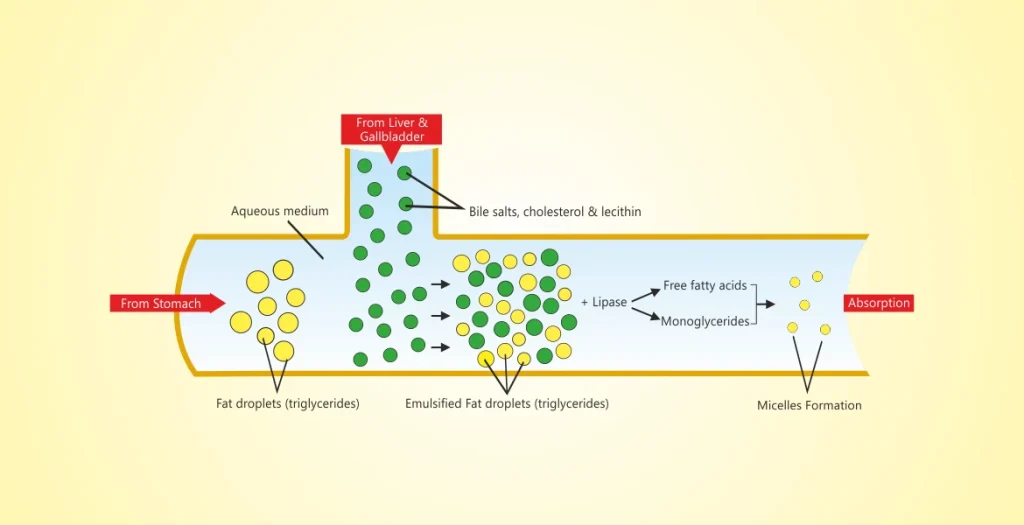
Fat is the major source of energy in poultry production, it provides about two times more energy than carbohydrate and protein. In the poultry industry many types of fat and oils are used according to fatty acid composition and their contribution to metabolizable energy (ME). Different energy source in poultry Source  Energy (calories/gm)  Carbohydrates  4  Protein  4  Fats  9  The efficient utilization of dietary fat required optimum digestion and absorption of fat in the gastrointestinal tract of poultry birds. For digestion of fat, fat undergone emulsification process and it is done by bile salts which are normally present in the poultry gut, major function of bile is a biological steroidal detergent that emulsifies and solubilizes lipids, thereby playing a critical role in fat digestion and absorption. Stages of Lipid Digestion: Phase 1: Emulsification Dietary fat droplets are dissolve in the water by action of bile salts which is secreted by liver Phase 2: Fat Hydrolysis In this stage enzymatic action takes place which is initiated by lipase enzyme. By the enzymatic action larger fat droplets are hydrolyzed into simpler fatty acids, mono-glycerides & di-glycerides. Phase 3: Micelle formation Now simpler lipid form is undergone into micelle formation which facilitates dispersion in a liquid colloid Phase 4: Absorption Absorption of micelles takes place Limitation with natural emulsifier:  In poultry fat digestion is influenced by numerous factors such as bile acid secretion and dietary fat sources. Bile salts secretion, required for emulsification and micelle formation in the intestine, has been found to be influenced by quantity and quality of dietary lipids and by other emulsifiers. Several studies have shown that bile salt secretion and the activity of pancreatic lipase are reduced in young chicks in which bile salts secretion appears to be first limiting factor for lipid digestion through the first few weeks of post hatch. It is also suggested that presence of free radicals also interfere with the fat utilization resulting poor FCR, poor growth, loss of immunity & loss of nutrients. Why there is need for synthetic emulsifiers? At birth and during early stage of development the use of biosurfactant endogenous and/or exogenous means of enhancing the utilization of fat in young birds. The physiological limitations of the digestive system of broilers may be overcome using endogenous and/or exogenous strategies to maximize feed digestion and absorption. The addition of synthetic emulsifier to broiler diets is a very common practice as compared to other dietary supplements. The mode of action of emulsifiers is to increase the active surface of fats, allowing the action of lipase, which hydrolyze triglyceride molecules into fatty acids and mono-glycerides and favor the formation of micelles consisting of lipolysis products. This is an essential step for lipid absorption, as it creates a diffusion gradient that increases absorption. Other benefits of synthetic emulsifiers: Supplementation of emulsifiers has been shown to stimulate intestinal cell proliferation and prevent intestinal apoptosis. It is also alleviated mucosal damage and improves survival after lipopolysaccharide induced intestinal injury. Therefore, emulsifier supplementation may potentially protect the intestine from injury or infections.

Knowledge Centre

Mycotoxins in Poultry

Mycotoxins are the secondary metabolite produced by fungal species in feed under stressful production conditions-are considered to be among the most important feed-born stress factors to impact birds. They produces a variety of diseases, collectively called ‘mycotoxicosis” directly or in combination with other primary stressors such as pathogens Fungal Species Toxins Produced Aspergillus flavus Aflatoxins B1,B2, cyclopiazonic acid Aspergillus parasiticus Aflatoxin B1, B2, G1, G2 Aspergillus ochraceus Ochratoxin A Aspergillus versicolor Sterigmatocystin, cyclopiazonic acid Penicillium verrucosum Ochratoxin A citrinin Penicillium roqueforti Roquefortine, penicillic acid Penicillium purpurogenum Rubratoxins Penicillium expansum Patulin, Citrinin Fusarium sporotrichiodes T-2 toxin Fusarium verticillioides Fumonisin B1 Fusarium graminearum Eoxynivalenol, Zearalenone Alternia alternate Tenuazonic acid Stachybotrys atra Satratoxins Effects of Mycotoxins Aflatoxins B1 (AFB1)  Ochratoxicosis (Ochratoxin) Citrinin toxicosis (Citrinin) Trichothecenes toxicosis (T-2 toxin) Moniliformin toxicosis Fumonisins toxicosis (FB1-Fumonisin B1) Source, effect & toxic level of Mycotoxins Feed ingredients Mycotoxin Origin Attention Limit Toxic Limit Maize, Oats Aflatoxin Aspergillus flavus Aspergillus paraciticus Aspergillus nomius 50 ppb 1000 ppb Wheat, Corn, Barley Trichothecenes -Deoxynivalenol (DON) T2 Toxin Fusarium graminearum Fusarium sporotrichoides 400 ppb 1000 ppb T2, DAS : 2000 ppb DON: 10000 ppb Maize, Oats, Wheat, Barley, Oats Ochratoxin A Aspergillus ochraceus Penicillium verrucosum 100 ppb 2000 ppb Maize Fumosin Fusarium moniliforme Fusarium verticillioides 10000 ppb 50000 ppb Maize, Barley Zearalenone Fusarium graminearum 2000 ppb 100000 ppb The problem of mycotoxicosis is not so easy to solve and requires constant attention throughout the entire process of grain harvest, shipping, storage, feed manufacturing, and its formulation. Utilization of mycotoxin contaminated raw materials presents a major problem. Detoxification as well as routine mycotoxin analysis of feed ingredients is an important step in a control programme at field level. Physical, chemical and biological methods are essential to counteract the level of contamination of mycotoxins in foods and feeds. The cost involved and reduction in nutritive value of feed are some of the constraints which limit the use of such procedures during the feed formulation. Various studies further suggest that the total elimination of moulds and their toxins is practically impossible, so there is a great need for the use of such agents that are able to bind the toxins selectively in the gut, thus limiting their bioavailability in the consumers. In addition, the possible presence of toxic residues in the poultry products (egg, meat), which enters into the food chain may have potential risk by their detrimental effects on human health. At present, no limits have been set in India for most of the mycotoxins known to produce adverse effects in poultry birds. There is an urgent need to set a rational limit for such mycotoxins for the economic growth of poultry industry. The most important mycotoxin risk is invisible  Acute mycotoxicosis clinical symptoms:  Majority of cases subacute mycotoxicosis:  So due to mycotoxicosis there is reduction in villi size and inhibition of nutrients transporters resulting lower Nutrient absorption. Due to gut barrier damage there is alteration of tight junctions, decrease goblet cells functionality. Also impairment in Immune functions either Innate or acquired immunity so birds are more prone to various diseases and also poor vaccination response. Prevention & control of Mycotoxicosis: In addition to preventative measures, by using the right mycotoxin adsorbent we can protect our business and animals from the negative effects of mycotoxins. As this approach is rather inexpensive and products can be easily incorporated in the birds diet the use of mycotoxin binder has become common practice. The guidelines for selecting a good mycotoxin binder to comply with specific criteria include:  Proven binding efficacy Reduction of the potential for hazardous mycotoxins within the gastro-intestinal tract Broad and specific spectrum of activity: binding wide range of mycotoxins& not bind with nutrients Absence of nutritional side effects Not containing any toxic substances

Knowledge Centre

Poultry litter management

Keeping litter dry is a critical part of overall management on every poultry farm which affects birds performance, growth, health & Immunity. Dry litter helps to control ammonia level, provides a healthy flock environment and reduces condemnations due to hock & footpad burns and breast blisters. Poultry litter consists of bedding material (Shavings, rice hulls etc.), manure, feathers and other components. Dry litter is important for the health and welfare of birds, as well as the people who work in the house. When litter begins to retain moisture it will clump together, which referred to as caking. Only about 20% of the water consumed is used for growth, most of it eventually reaches the litter as manure. To prevent caking, this added moisture within the litter must be removed through adequate ventilation. Once cake starts to form, it is difficult to reverse the process. It is usually requires over-ventilation to correct the problem, which can lead to excessive gas use during cold weather and high energy costs year-round. Problem with conventional litter: Poor Quality Litter affects: Litter borne diseases How to maintain litter quality Features of good quality litter Non toxic Based on latest available technology Maintain permanent freshness over the time Gentle, non-irritating and natural Without calcium carbonate or phosphates Ideal for use at or after birth of chicks/animal Improves sanitary status of animal house Reduces ammonia content Having essential oils and plants extracts

Scroll to Top
WhatsApp